
Local Government FAQs: How St John services communities
As Western Australia’s ageing population is increasingly being supported to stay at home, Local Government councils can benefit from knowing the services and support St John WA, as a highly networked not-for-profit healthcare organisation, provides to ratepayers in the community.
John WA is a not-for-profit organisation committed to helping communities live well, connect, and respond. Each year, we make more than 1.33 million community connections through education programs, first aid training, community response networks, transport services, health outreach, and emergency care.
As a social enterprise, revenue generated through commercial activities and from generous partners and donors are reinvested back into the community to increase preparedness, strengthen local capacity, and improve access to essential care.
St John services give back to Western Australians to help them stay well, stay connected, and be supported when it matters most. Among those services:
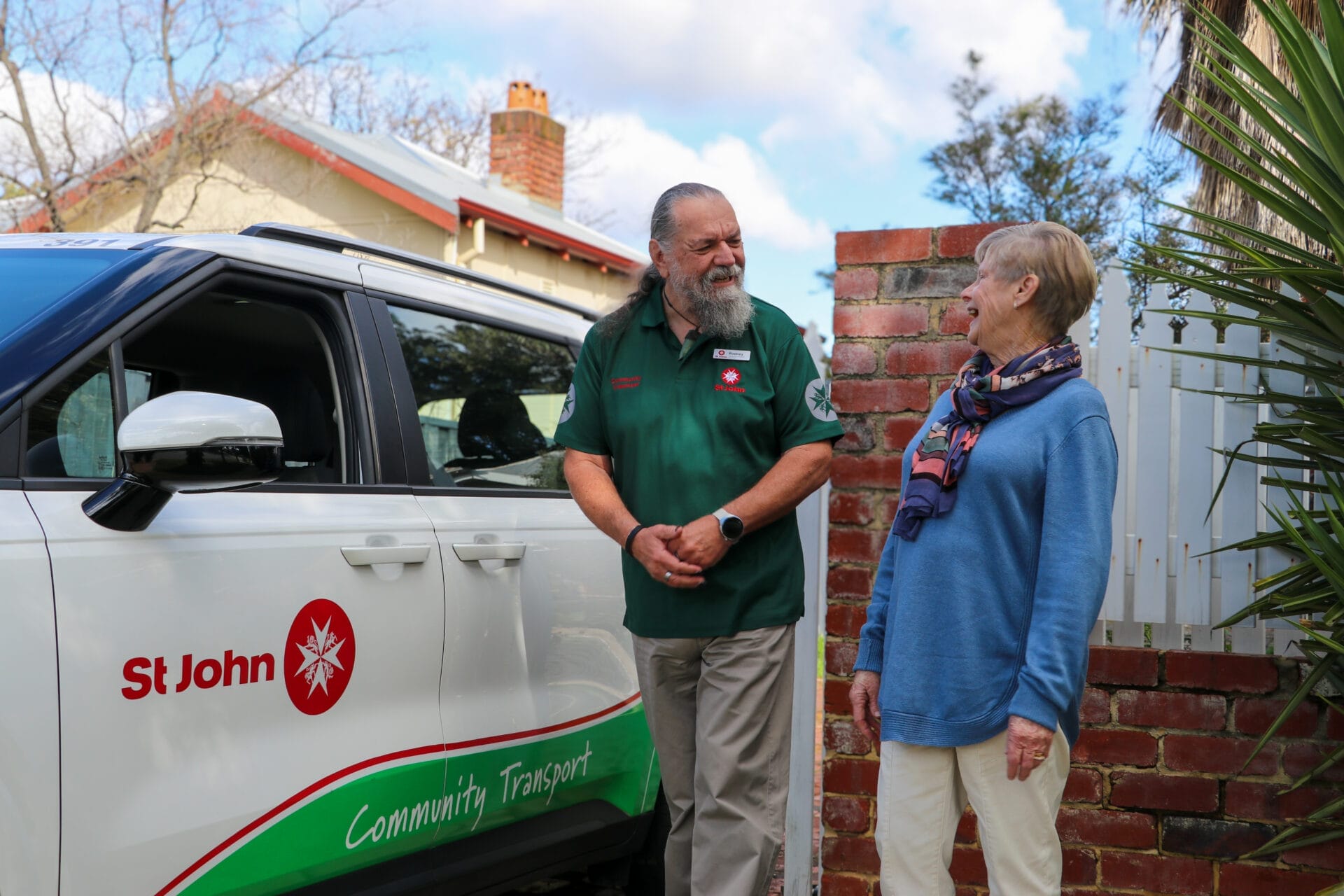
- Community Transport Service: 65,917 transports for those with mobility issues, alongside their carers, to medical appointments safely.
- Event Health Services: 24,550 patients across 3149 events, ranging from school sports to big arenas and mass events.
- St John Urgent Care: 122,164 patients who avoided lengthy Emergency Department waits and were treated at six metro locations for injuries requiring stitches, X-rays and casting.
- St John GP: 187,085 patients treated.
- St John Dental: 24,906 patients treated.
- First Aid: 114,673 people trained online and in person at 169 training locations across the state, as well as 116,665 people engaged in First Aid and Ambulance awareness activities at public events.
- First Aid for Mental Health: 3139 people trained to recognise the signs of mental health issues in others and themselves in the workplace.
- Tiny Tots: 12,000 parents and carers learned first aid specific to toddlers and babies over five years.
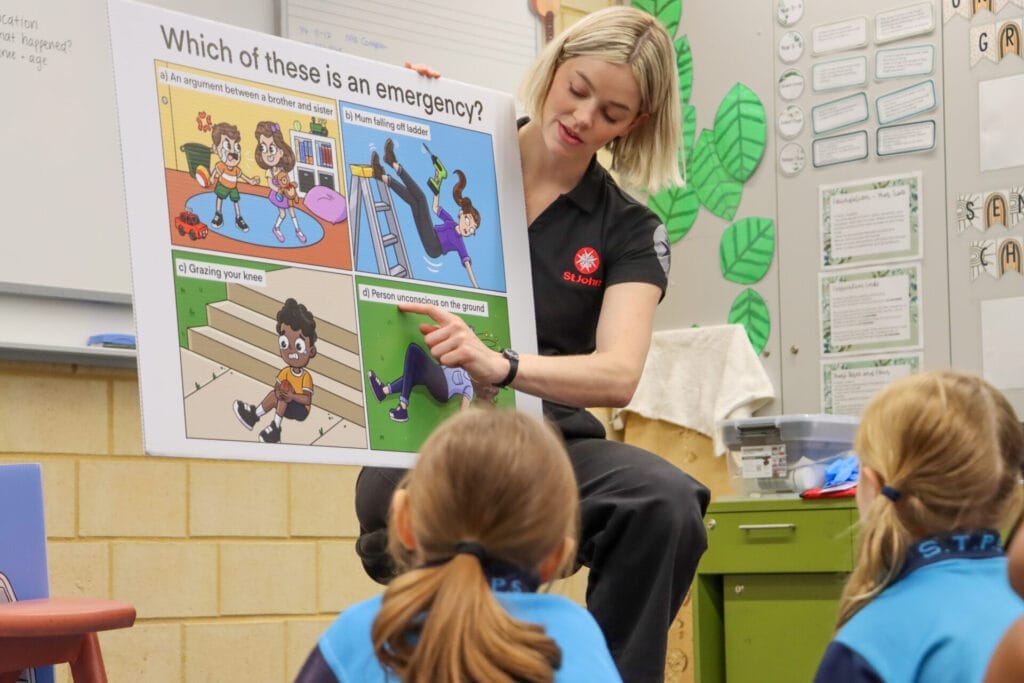
- First Aid Focus: 86,236 school students delivered charitably funded age-appropriate first aid skills by the Youth and Community Engagement team.
- First Aid for Me: These free 15-minute online courses deliver relevant skills specific to incidents in the community, such as snake bites for hiking, burn treatment for cooks, and importantly lifesaving skills for new drivers.
- St John Academy: 112 future health leaders, aged 12 to 17, enrolled across six locations.
- Yarning First Aid: Delivering culturally appropriate first aid knowledge and skills to rural and remote First Nations communities with the support of an Elder or Aunty.
- Community First Responder Program: 55,217 registered St John First Responder app users, with 466 incidents accepted by community first responders.
- State Defibrillator Network: More than 12,000 registered Automated External Defibrillators (AEDs) across about 10,000 locations across the state.
- St John Safe: 413 assessments onsite, assisting workplaces to be better prepared for a medical emergency.
- Volunteering: 437,648 hours dedicated to the community.
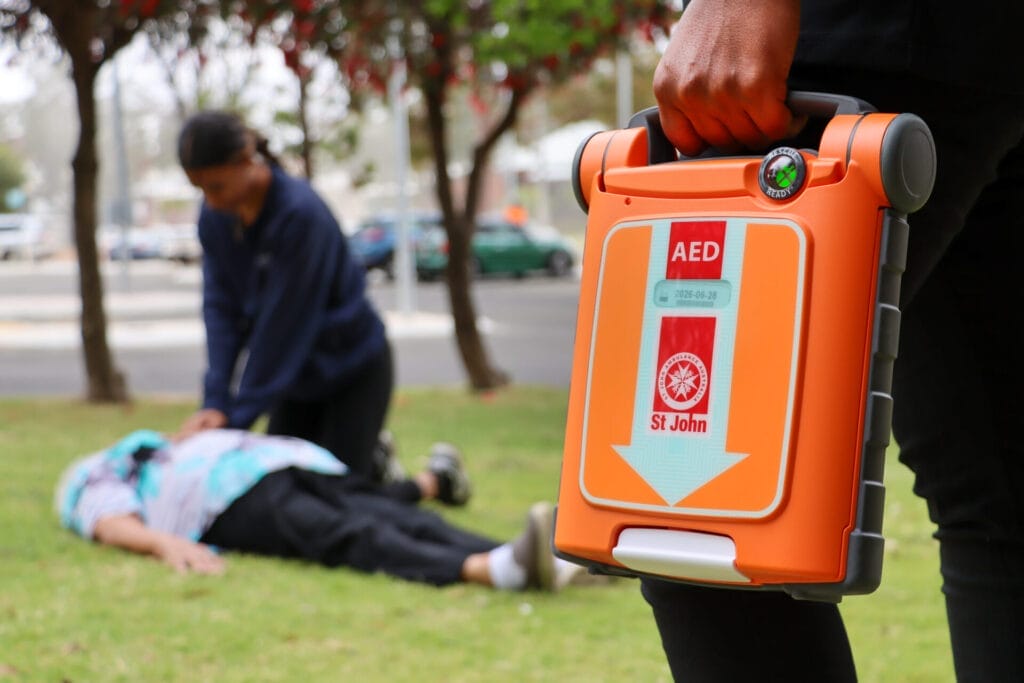
As guided by the Australian Resuscitation Council (ARC), St John continues to advocate for first aid training at every age and equipping communities with ARC endorsed lifesaving equipment, such as Automated External Defibrillators (AEDs) in case of cardiac arrest. Nobody wants to be faced with a medical emergency, however everybody wishes they knew how to assist when one occurs. St John’s message when someone suddenly collapses unconscious in a likely cardiac arrest emergency is to Call.Push.Shock:
- Calling Triple Zero (000) for an ambulance. St John WA call takers will stay on the line until ambulance crews arrive and be the helping voice you need in an emergency.
- Start CPR. You will be guided by our Triple Zero (000) call takers on exactly how to perform until ambulance crews take over. (Free first aid guides, including DRSABCD Action Plan and CPR timer, can be found on the St John First Responder app.)
- And St John WA will help find nearby assistance by calling on qualified first aiders via the St John First Responder app to opt-in and assist with CPR until an ambulance arrives,
- As well as find the nearest registered Automated External Defibrillator (AED) and get it brought to the scene. AEDs give talking instructions once opened. Applying one can never harm someone as they will not deliver a shock to a normal heart rhythm.
Ratepayers and council staff too can help their loved ones and others, alongside St John by:
- Becoming a community first responder and learn first aid.
- Register as an accredited first aider on the St John First Responder app.
- Get a St John Safe assessment for the workplace, which is free for businesses, schools and sporting clubs.
- Buy an AED and register it on the State Defibrillator Network and consider having AEDs available 24/7 to the community with a lockbox cabinet.
- Alone at home, allow paramedics access by registering your lockbox code safely with St John.
If you are a business owner and want to give back, please consider one of St John’s community programs, and get in touch here: https://giving.stjohnwa.com.au/partnerships
Together we can all help save lives.